
Surgical intervention for elbow dysplasia — whether arthroscopic fragment removal for fragmented coronoid process, ulnar osteotomy for ununited anconeal process, or OCD debridement — represents only the beginning of treatment. The post-surgical recovery period, typically spanning 8-12 weeks before return to full activity, determines in large part how well the surgery translates into functional improvement. A technically excellent arthroscopic procedure followed by inadequate post-operative management will consistently produce inferior outcomes compared to the same surgery followed by a structured, progressive rehabilitation protocol. This guide walks through the complete recovery timeline, providing practical guidance for every phase from the immediate post-anaesthetic period through return to full activity and the transition to long-term osteoarthritis management.
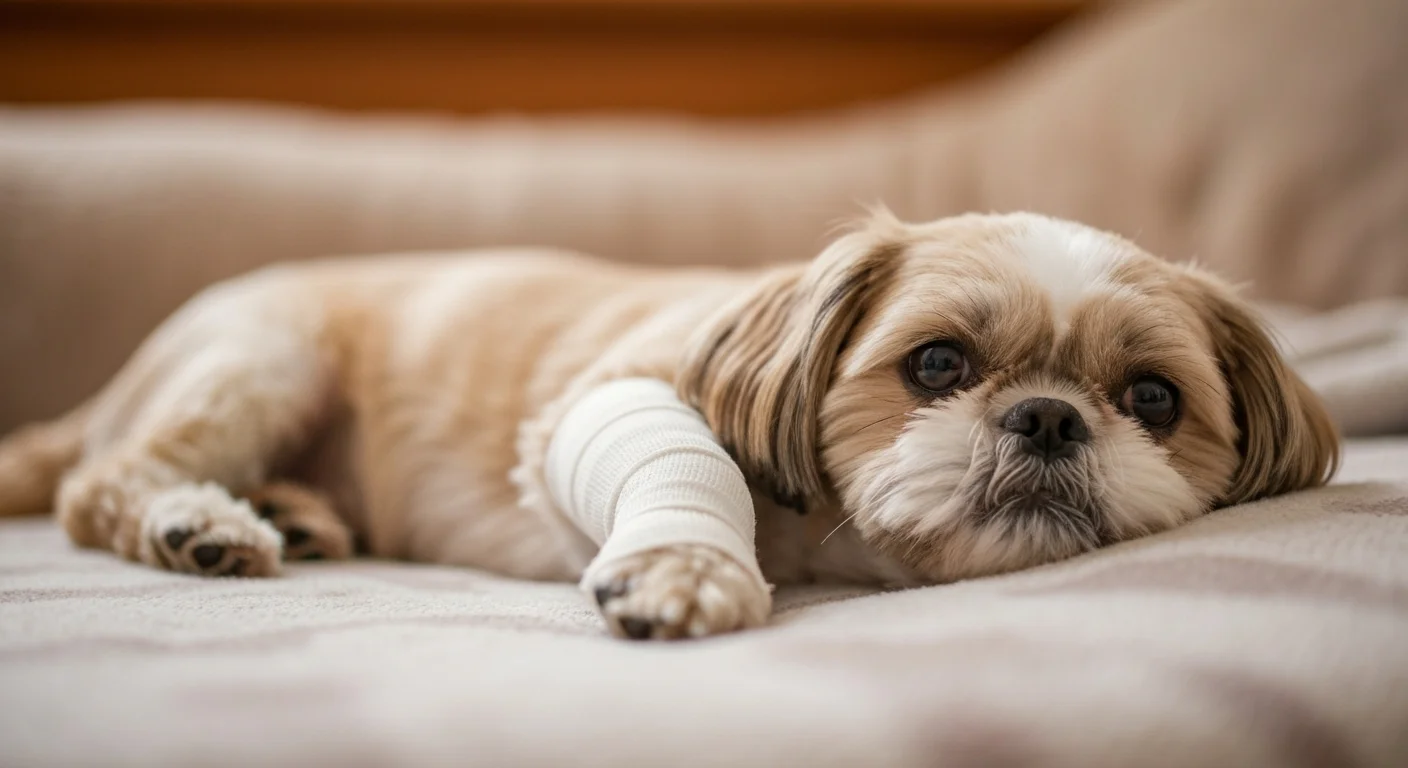
The First 24-48 Hours: Immediate Post-Operative Care
The period immediately after elbow dysplasia surgery is dominated by anaesthetic recovery, acute pain management, and wound monitoring. Most elbow surgeries are performed under general anaesthesia, and full neurological recovery takes 12-24 hours in most dogs. Some residual sedation, mild ataxia, and reduced responsiveness are normal during this window.
Anaesthetic Recovery
Dogs should be kept warm and quiet during anaesthetic recovery. Hypothermia is common after general anaesthesia, and maintaining body temperature with blankets or heated recovery surfaces is important. Offer small amounts of water once the dog can swallow normally; food in small amounts 4-6 hours post-recovery if nausea is absent. Many dogs experience temporary nausea from opioid analgesics administered peri-operatively; anti-emetics are frequently prescribed as part of the discharge medication package for this reason.
Immediate Pain Management
Adequate analgesia in the first 24-48 hours post-operatively is critical both for the dog's welfare and for recovery quality. Dogs in acute post-operative pain self-restrict weight-bearing excessively, which delays muscle activation and rehabilitation progress. Standard discharge analgesic regimens typically include:
- NSAID (e.g., meloxicam, carprofen): Initiated immediately or within 24 hours post-operatively if not contraindicated by renal or haemostatic concerns. Continue for minimum 2 weeks; many clinicians prescribe 4-6 weeks post-operatively for elbow procedures.
- Opioid analgesic (e.g., tramadol, buprenorphine patches): Provides acute post-operative pain control for the first 3-5 days. Tramadol at 3-5 mg/kg every 8 hours for the first week covers the peak inflammatory phase after surgery.
- Gabapentin (if central sensitization suspected): Dogs with chronic pre-operative pain may benefit from gabapentin continuation post-operatively to address central sensitization that persists independent of the surgical site's acute inflammation.
Wound Care
Arthroscopic elbow surgery produces very small portal wounds (typically 3-5mm) that heal rapidly. Open procedures or ulnar osteotomies involve longer incisions requiring standard wound monitoring. Check the surgical site twice daily for the first week for signs of infection: increased redness, warmth, swelling, discharge, or wound separation. Most surgical sites should be kept dry for the first 7-10 days; plastic bag protection during brief outdoor excursions for toileting is recommended for this period.
E-collar Use
Most dogs will attempt to lick or chew at surgical sites if given the opportunity — elbow surgery sites are easily reached by the contralateral paw and mouth. Elizabethan collars (e-collars) should be maintained continuously for at least the first 10-14 days post-operatively. Inflatable "donut" collars are better tolerated by some dogs but provide less reliable protection for elbow sites than traditional e-collars. Alternatives such as surgical suits should be discussed with the surgical team if e-collar tolerance is a significant concern.
Weeks 1-3: Restricted Exercise Phase
The first three weeks post-surgery are characterized by the need to limit joint loading while preventing the muscle atrophy that occurs rapidly during inactivity. Complete rest is rarely appropriate or beneficial; controlled, gentle movement promotes synovial fluid circulation, maintains cartilage nutrition, and prevents the periarticular fibrosis that develops with prolonged immobility.
Exercise Protocol: Weeks 1-3
| Week | Activity Level | Walk Duration | Specific Restrictions |
|---|---|---|---|
| 1 | Minimal — toileting only | 3-5 minutes, 4x daily | No off-lead, no running, no stairs, no jumping |
| 2 | Restricted leash walks | 5-10 minutes, 3-4x daily | Leash only, controlled pace, soft surfaces |
| 3 | Short controlled walks | 10-15 minutes, 3x daily | Leash only; avoid uneven terrain |
Early Physical Therapy
Passive range of motion (PROM) exercises can typically begin 24-48 hours post-operatively for arthroscopic procedures. Gentle, controlled flexion-extension of the elbow through its comfortable range maintains joint mobility without loading the operated site. A physiotherapist or rehabilitation veterinarian should demonstrate appropriate PROM technique before owners attempt home exercises — incorrect force or range can cause pain and setback progress.
Cold therapy (cryotherapy) applied to the operated elbow for 10-15 minutes 3-4 times daily during the first week reduces post-operative inflammation and pain. Wrap an ice pack or frozen peas in a thin cloth — never apply ice directly to skin. After the first week, transition to contrast therapy (alternating cold and warm) or warm therapy alone to promote circulation and reduce stiffness.
Weeks 3-6: Progressive Loading Phase
As acute post-operative inflammation resolves and soft tissue healing progresses, exercise can be gradually increased. The objective during this phase is progressive weight-bearing normalization — encouraging the dog to use the operated limb with increasing confidence while maintaining pain control.
Exercise Progression
Walk duration can be extended by 5 minutes every 5-7 days, monitoring for post-exercise lameness. If lameness increases after a particular activity increment, return to the previous level for 3-5 additional days before attempting progression again. Normal progression for an uncomplicated arthroscopic FCP removal:
- Week 4: 20-minute controlled leash walks, 2-3 times daily on flat terrain
- Week 5: 25-30 minutes twice daily; gentle inclines acceptable
- Week 6: 30-40 minutes twice daily; begin structured physiotherapy if not already started
Hydrotherapy Introduction
Underwater treadmill or pool hydrotherapy can typically begin 3-4 weeks post-operatively once surgical wounds are fully healed (confirmed by the surgical team). Warm water reduces pain perception and allows limb use at reduced effective body weight, enabling more normal gait patterning than land exercise during the early recovery phase. Many rehabilitation centers offer 2-3 sessions per week during this phase as the standard of care for elbow surgery recovery. The broader rehabilitation and physical therapy protocols cover hydrotherapy in detail.
Does Rehabilitation Improve Surgical Outcomes?
Several studies have examined whether structured post-operative rehabilitation improves outcomes after elbow dysplasia surgery. Marsolais et al. (2002) found that dogs receiving structured rehabilitation after cranial cruciate repair returned to normal function 2-3 weeks earlier than control dogs, with force plate measurements demonstrating superior outcomes at 8 and 12 weeks. While Elbow-specific rehabilitation outcome studies are more limited, the physiological principles of post-surgical recovery support that structured protocols outperform unguided activity restriction in joint surgery across species.
Weeks 6-12: Return to Function Phase
The six-to-twelve-week phase transitions from controlled recovery to progressive return to normal activity. Most dogs with uncomplicated arthroscopic FCP treatment achieve full activity restoration by 10-12 weeks, though secondary OA management becomes the ongoing long-term focus after this point.
Exercise Progression to Normal Activity
Off-lead exercise can typically be reintroduced carefully between weeks 8 and 10 for arthroscopic procedures, beginning with controlled access to a small enclosed area rather than free-running in large spaces. Structured play activities — controlled fetch with few repetitions, short swim sessions — are preferable to unlimited free-running during this phase. Repetitive high-impact activities (agility, prolonged fetch on hard surfaces, repetitive jumping) should be delayed until 12 weeks at minimum and should be reintroduced gradually even after clearance.
The 12-Week Assessment
Most surgeons schedule a formal reassessment at 10-12 weeks post-operatively. This assessment typically includes clinical gait evaluation, range of motion assessment, and often repeat radiographs to monitor OA progression or healing at osteotomy sites. For ulnar osteotomies (used in UAP treatment and incongruity correction), radiographic confirmation of osteotomy site healing is essential before full activity is permitted — some UAP osteotomies require 12-16 weeks for complete bony bridging.
Special Considerations for Bilateral Surgery
As discussed in our article on bilateral elbow dysplasia, recovery from staged or simultaneous bilateral elbow surgery presents unique challenges. Dogs recovering from bilateral procedures cannot effectively offload one limb onto the other during recovery, making hydrotherapy even more important as a low-impact recovery modality. Rehabilitation timelines may be extended by 2-4 weeks for bilateral cases, and appetite management requires particular attention as reduced mobility can lead to weight gain during extended recovery periods.
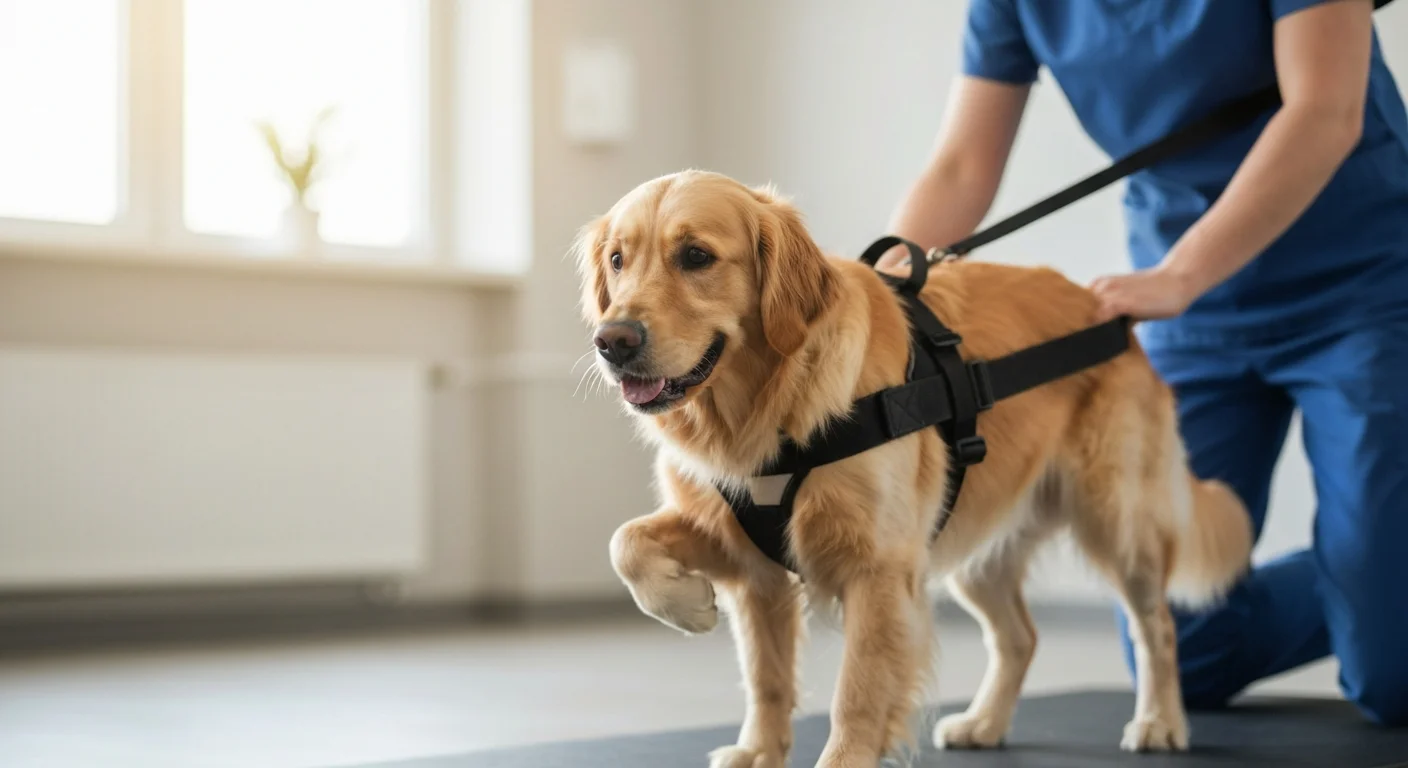
Transitioning to Long-Term OA Management
The completion of the acute recovery period does not mean treatment ends. Every dog that has undergone elbow dysplasia surgery has established secondary OA that will require lifelong management. The transition from post-surgical recovery to long-term maintenance management should be planned explicitly at the 12-week assessment:
- Ongoing NSAID strategy: Determine whether daily NSAID therapy, intermittent dosing for activity-related flares, or a monitoring-and-treat approach is appropriate for the individual dog's OA severity and activity level.
- Weight management plan: Establish a target body weight and feeding protocol for ongoing maintenance. Weight management is more impactful than any pharmacological intervention for long-term OA quality of life.
- Maintenance exercise program: Define the ongoing exercise program — type, duration, frequency — that maintains muscle mass and joint health without excessive loading. Swimming, walking, and controlled play typically form the backbone of long-term maintenance activity.
- Monitoring schedule: Annual clinical reassessment and periodic (every 2-3 years) radiographic monitoring to track OA progression and guide treatment intensification decisions as detailed in our secondary OA management guide.
Related Database Resources
- Surgical Interventions - Procedures and their specific recovery requirements
- Rehabilitation and Physical Therapy - Structured exercise programs for recovery
- Pain Management - Analgesic protocols during and after recovery
- Conservative Management - Long-term non-surgical maintenance
Red Flags: When to Contact Your Veterinarian
Owners should be instructed to contact the surgical team promptly if any of the following occur during recovery:
- Sudden increase in lameness or non-weight-bearing lameness after a period of improvement
- Wound discharge, increasing swelling, heat, or odour at the surgical site
- Fever, lethargy, or loss of appetite beyond the first 24 hours post-operatively
- Persistent non-weight-bearing beyond 5-7 days post-arthroscopy (some lameness is expected; complete non-weight-bearing beyond this timeframe warrants evaluation)
- Suspected self-trauma to the surgical site
- Any sign that suggests the dog is in uncontrolled pain despite the prescribed analgesic regimen
Conclusion
Post-surgical recovery after elbow dysplasia procedures demands the same structured, evidence-based approach as the surgery itself. The progression from immediate post-anaesthetic care through restricted exercise, progressive loading, return to function, and transition to long-term OA management represents a continuum that extends from the day of surgery through the rest of the dog's life. Owners who understand the rationale behind each recovery phase, who maintain appropriate exercise restrictions during the healing period, and who commit to the long-term management strategies required for a joint with established OA will give their dogs the best possible functional outcomes from what is a significant and life-altering surgical intervention.