
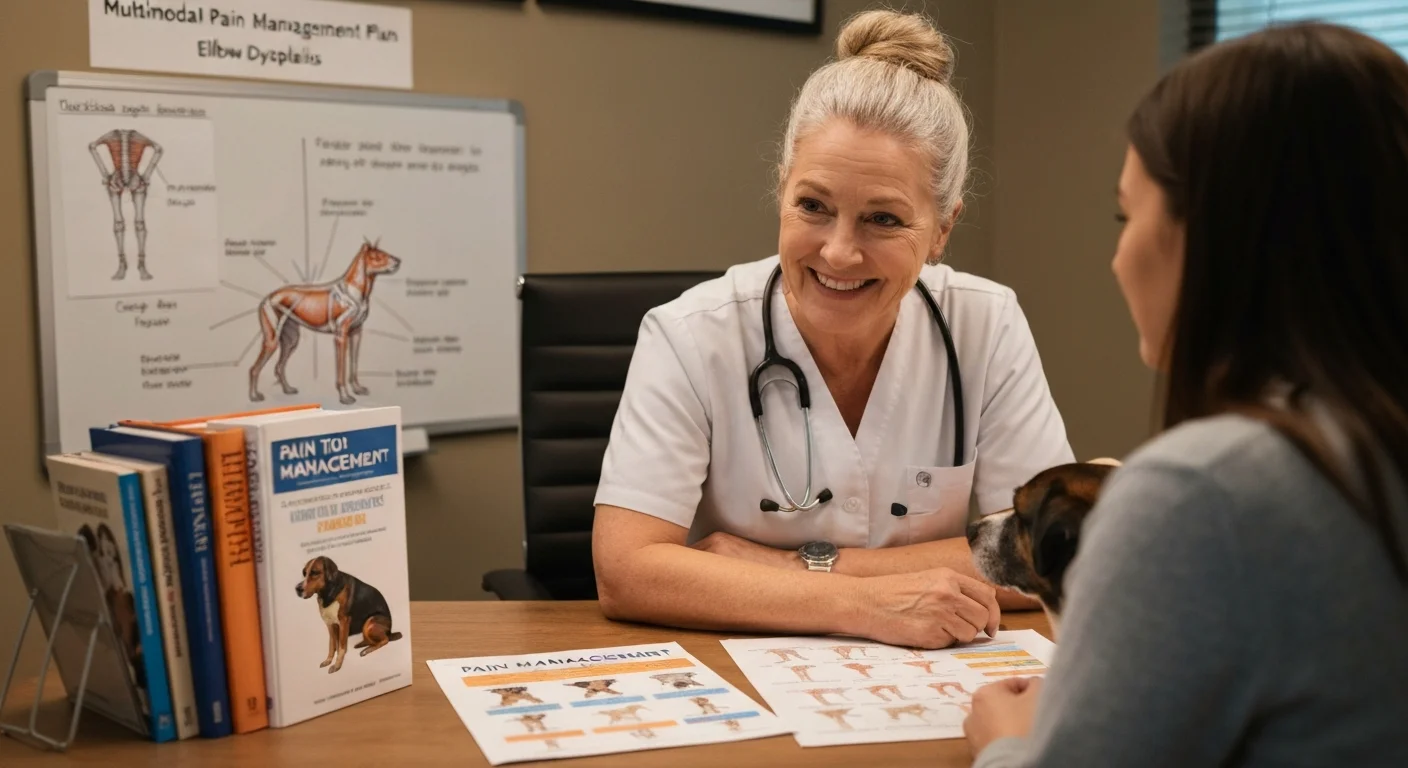
Pain is the defining clinical burden of elbow dysplasia. Whether a dog presents at seven months with acute forelimb lameness or at six years with chronic secondary osteoarthritis, pain management is the central treatment objective across all stages of the disease. Yet elbow dysplasia pain is not a single entity — it involves nociceptive pain from joint inflammation and structural damage, sensitization of central pain pathways with chronicity, and activity-related flares superimposed on baseline discomfort. Effective management demands a multimodal approach that addresses multiple pain mechanisms simultaneously rather than relying on any single analgesic drug or intervention.
Understanding Pain in Elbow Dysplasia
The pain of elbow dysplasia arises from several distinct mechanisms that evolve as the condition progresses. In acute presentations, particularly in young dogs with fragmented coronoid process or UAP, synovial inflammation drives pain through prostaglandin and cytokine release. Joint effusion stretches the joint capsule, which is richly innervated with mechanoreceptors and nociceptors, creating pressure-related discomfort even at rest.
As secondary osteoarthritis develops, the pain profile shifts. Cartilage itself is aneural, but the subchondral bone exposed by cartilage loss is heavily innervated. Osteophyte formation, while representing a biological attempt at joint stabilization, creates periosteal pain during growth and mechanical impingement during movement. Synovial membrane hypertrophy contributes chronic inflammatory pain, while joint capsule fibrosis restricts range of motion, generating pain at the extremes of movement.
Central Sensitization in Chronic ED
Dogs with chronic elbow dysplasia and secondary osteoarthritis develop central sensitization — a phenomenon where repeated nociceptive input from the joint alters spinal cord and brain pain processing. Sensitized dogs exhibit hyperalgesia (exaggerated response to painful stimuli) and allodynia (pain from normally non-painful stimuli). This central component explains why some dogs with moderate radiographic changes have severe clinical pain, while others with advanced OA show surprisingly mild lameness. Central sensitization requires specific analgesic strategies targeting spinal and supraspinal pain pathways.
Non-Steroidal Anti-Inflammatory Drugs
NSAIDs remain the pharmacological cornerstone of elbow dysplasia pain management. They address peripheral inflammatory pain through cyclooxygenase inhibition, reducing prostaglandin synthesis and thereby limiting both the inflammatory response and the sensitization of peripheral nociceptors. For acute flares and chronic management, NSAIDs provide the most evidence-supported analgesia available in veterinary practice.
Veterinary-Approved NSAIDs
| Drug | Dosing | Key Considerations | Monitoring Required |
|---|---|---|---|
| Meloxicam | 0.1 mg/kg once daily (after loading dose) | Well-studied long-term safety; available in liquid form | Annual chemistry, urinalysis |
| Carprofen | 2.2 mg/kg twice daily or 4.4 mg/kg once daily | Long safety record; idiosyncratic hepatotoxicity possible | Chemistry at 2 weeks, then every 6 months |
| Grapiprant | 2 mg/kg once daily | EP4 receptor antagonist; different mechanism may reduce GI risk | Periodic chemistry |
| Deracoxib | 1-2 mg/kg once daily | COX-2 selective; suitable for long-term use | Annual chemistry, urinalysis |
Human NSAIDs Are Dangerous in Dogs
Ibuprofen, naproxen, and aspirin are frequently toxic in dogs. Ibuprofen causes dose-dependent gastrointestinal ulceration and renal failure at doses far lower than equivalent human therapeutic doses. Even aspirin, sometimes recommended by well-intentioned owners, can cause serious GI bleeding with chronic use and interferes with platelet function. Only veterinary-approved NSAIDs should be used, at prescribed doses, with appropriate monitoring.
Adjunct Analgesic Therapies
For dogs requiring additional pain control beyond NSAIDs alone — whether due to inadequate NSAID response, NSAID intolerance, or severe chronic pain — adjunct analgesics targeting different pain mechanisms provide meaningful benefit when added to an NSAID backbone.
Gabapentinoids
Gabapentin and pregabalin modulate calcium channel activity in spinal cord and brain pain pathways, directly addressing the central sensitization component of chronic osteoarthritis pain. Clinical evidence for gabapentin in canine OA pain management has strengthened considerably since 2018, with multiple studies demonstrating improved force plate measurements and owner-assessed pain scores when added to NSAID therapy. Typical dosing is 5-10 mg/kg every 8-12 hours, with sedation the primary side effect at initiation.
Amantadine
This NMDA receptor antagonist specifically targets wind-up, the spinal cord phenomenon underlying central sensitization. For dogs with chronic pain that appears disproportionate to joint pathology severity, amantadine at 3-5 mg/kg once daily added to NSAID therapy may reduce the central sensitization component. A clinical trial by Lascelles et al. (2008) demonstrated significant improvement in force plate parameters in dogs with refractory OA pain when amantadine was added to meloxicam.
Injectable Disease-Modifying Agents
Pentosan polysulfate (PPS) and polysulfated glycosaminoglycan (Adequan) are classified as chondroprotective agents with anti-inflammatory properties. Both have demonstrated clinical benefit in dogs with osteoarthritis, reducing synovial inflammation and potentially slowing cartilage degradation. For dogs with active elbow OA secondary to primary dysplastic lesions, a loading protocol of weekly injections for 4-6 weeks followed by monthly maintenance represents standard supportive care at many specialty centers.
Physical Rehabilitation for Pain Management
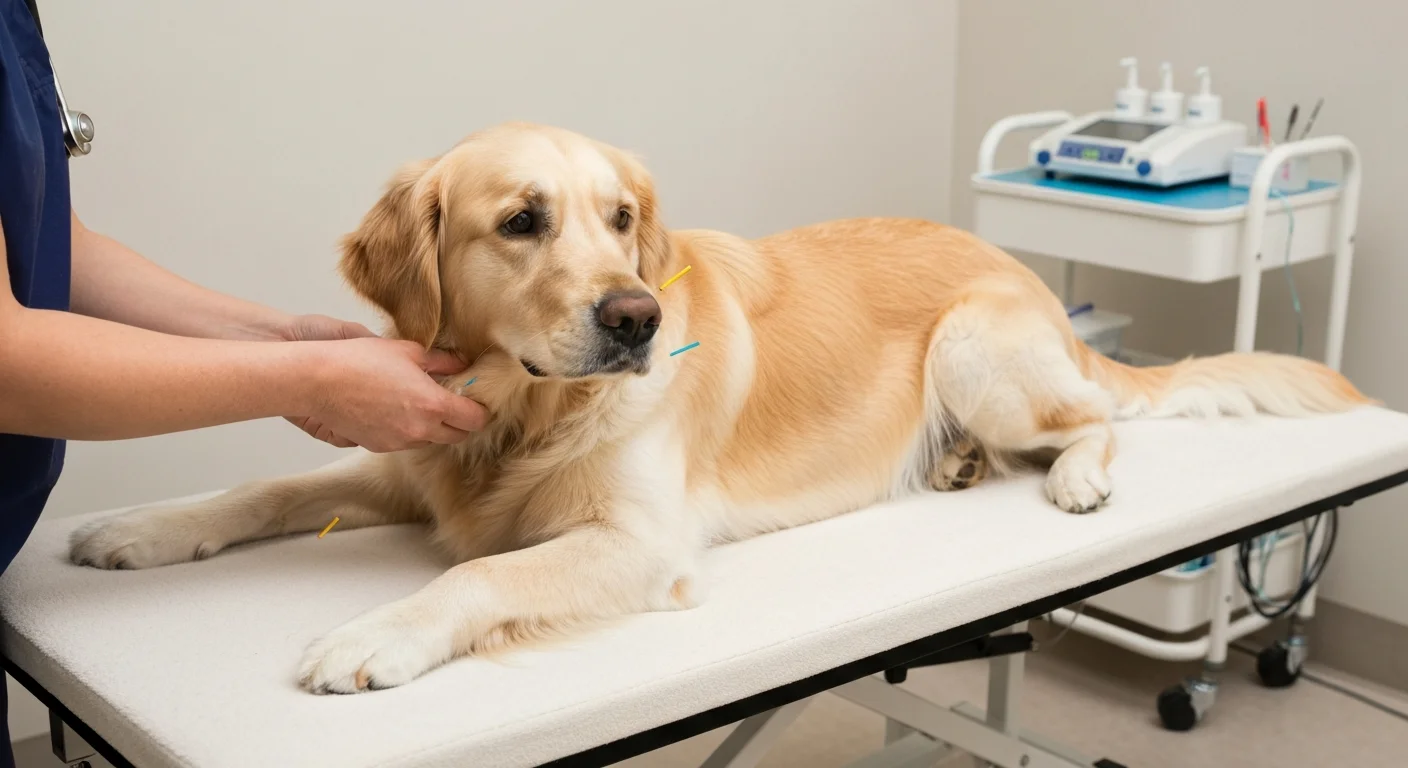
Physical rehabilitation addresses pain through mechanisms distinct from pharmacological approaches: improving muscle support around the dysplastic joint, maintaining range of motion to prevent capsular fibrosis, enhancing proprioception, and promoting the release of endogenous endorphins through controlled exercise. For dogs with chronic ED, rehabilitation is not optional — it is a core component of effective pain management.
- Therapeutic ultrasound: Deep heating of periarticular tissues reduces stiffness and improves soft tissue extensibility. Most beneficial before rehabilitation exercise sessions in dogs with significant capsular fibrosis.
- Transcutaneous electrical nerve stimulation (TENS): Low-intensity electrical stimulation activates descending pain inhibitory pathways. Dogs with chronic pain frequently show improved movement quality during and after TENS sessions.
- Laser therapy (photobiomodulation): Class IV laser therapy reduces inflammatory cytokine expression and promotes mitochondrial function in damaged tissue. Evidence has grown substantially since 2015; most comprehensive protocols target the elbow medially and laterally over three to four weekly sessions initially, transitioning to monthly maintenance.
- Hydrotherapy and underwater treadmill: Warm water reduces pain perception and allows limb loading without full weight bearing, enabling muscle maintenance in dogs reluctant to exercise on land. See our full guide on rehabilitation and physical therapy for ED dogs.
Corticosteroid Use: When and Why
Intra-articular and systemic corticosteroids provide potent anti-inflammatory analgesia but carry significant risks with repeated or long-term use. Cartilage catabolism, joint sepsis risk with repeated intra-articular injection, immune suppression, and systemic metabolic effects limit corticosteroid utility to specific situations: severe acute flares unresponsive to NSAIDs, cases where NSAIDs are contraindicated due to renal or gastrointestinal disease, and short-term bridging during NSAID washout periods before surgical intervention.
Never use corticosteroids concurrently with NSAIDs — the combination dramatically increases gastrointestinal ulceration risk. A washout period of at least five days (ideally seven to ten days) between discontinuing one class and starting the other is mandatory.
Lifestyle Modifications as Pain Management
Pharmacological and rehabilitative therapies exist within a broader context of lifestyle management that profoundly influences daily pain burden. Weight management deserves particular emphasis: each kilogram of excess body weight increases joint loading forces substantially, and dogs at the upper end of breed weight ranges consistently show higher pain scores than lean dogs with equivalent joint pathology.
The Weight-Pain Connection
A landmark study in obese dogs with OA demonstrated a 25-32% improvement in force plate measurements — objective pain indicators — following an 11-18% reduction in body weight, without any change in pharmacological management. Weight loss is one of the most effective pain management interventions available, yet it is frequently underemphasized in clinical practice. Body condition scoring at every consultation and a structured weight loss plan for overweight dogs should be standard practice in ED management.
Exercise modification rather than rest improves long-term outcomes. Controlled, low-impact activity maintains muscle mass, promotes joint fluid circulation, and reduces stiffness. Short, frequent walks on soft surfaces are preferable to prolonged high-impact exercise. Avoiding activities that require repetitive elbow extension under load, such as stairs, jumping, and fetch on hard surfaces, reduces pain flares while maintaining cardiovascular condition and muscle mass.
Related Database Resources
- Conservative Management - Full non-surgical treatment protocols
- Rehabilitation and Physical Therapy - Exercise programs for ED dogs
- Surgical Interventions - When surgery changes the pain equation
- Secondary Osteoarthritis - Long-term OA progression and management
Monitoring Treatment Efficacy
Objective assessment of pain management outcomes allows dose adjustments and protocol modifications before clinical deterioration becomes obvious. Force plate gait analysis provides the most objective measurement of forelimb loading, but is available only at referral centers. Validated owner questionnaires such as the Liverpool Osteoarthritis in Dogs (LOAD) instrument and the Canine Brief Pain Inventory (CBPI) capture functional pain impact and quality of life across time, providing practical monitoring tools for primary care settings.
Conclusion
Effective pain management in elbow dysplasia requires understanding the multimechanistic nature of joint pain, selecting appropriate pharmacological agents for the pain profile present, integrating physical rehabilitation as a core treatment component, and implementing lifestyle modifications that reduce joint loading and maintain muscle function. No single intervention is sufficient across the spectrum from acute presentation to chronic osteoarthritis management. The most successful outcomes occur in dogs managed by teams that individualize protocols to the dog's age, disease stage, activity requirements, and concurrent health conditions — adjusting strategies as the disease evolves over years of management.