
The Labrador Retriever generates more elbow dysplasia certification records than any other breed in the major international registries — a reflection not only of the breed's enormous population size but of the active health testing culture among responsible Labrador breeders worldwide. Yet despite this extensive testing history, elbow dysplasia remains a significant welfare challenge in the breed. True population prevalence estimates exceed 15-20% when accounting for selection bias in testing programs, making elbow dysplasia the most consequential developmental orthopedic condition in Labrador health after hip dysplasia. Understanding the breed-specific patterns of elbow disease in Labradors — the dominance of fragmented coronoid process, the high bilateral rate, the profound weight-body mass interaction, and the specific genetic architecture — equips breeders and clinicians to manage this condition more effectively than a generic approach allows.
Prevalence in Labrador Retrievers
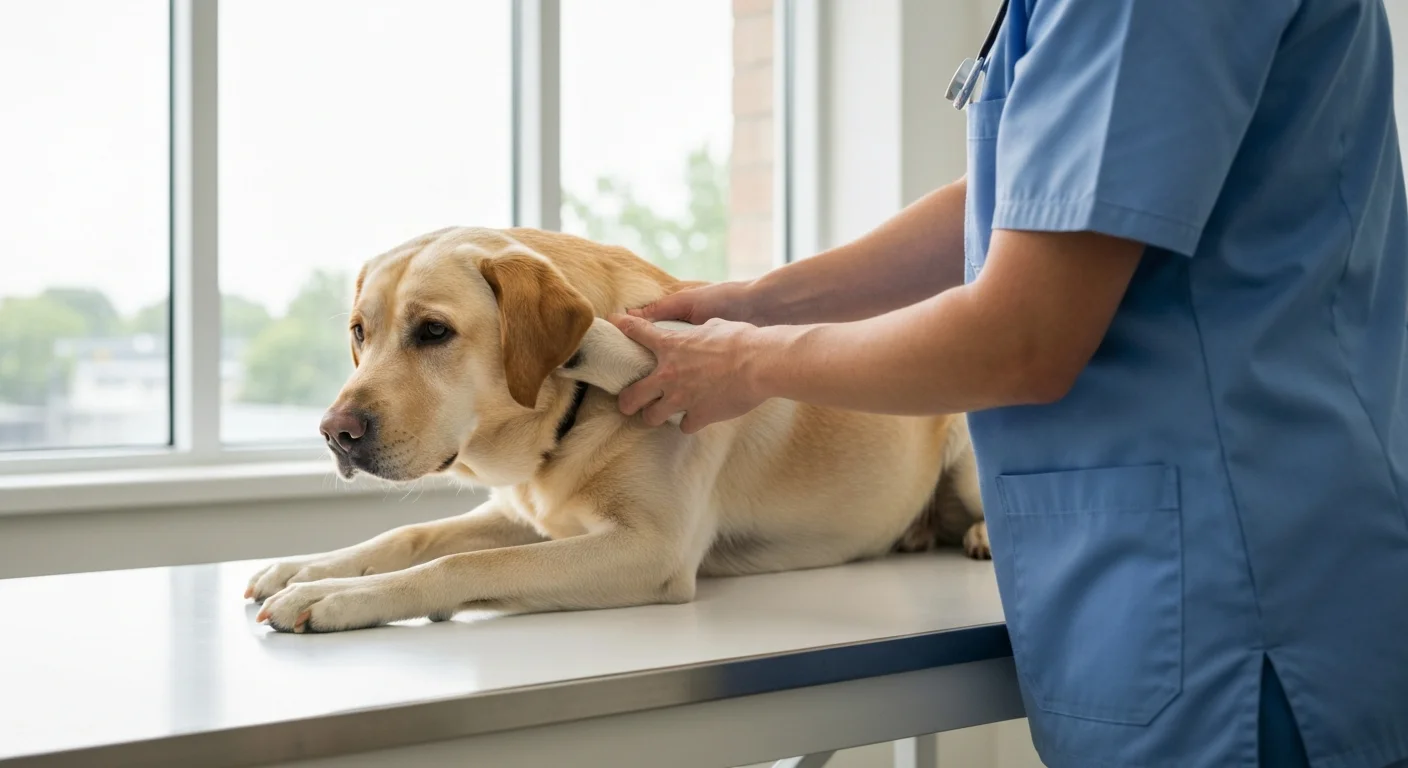
Labrador Retriever elbow dysplasia prevalence has been extensively documented across multiple international registries and longitudinal research programs. The following data provides a representative overview of current prevalence estimates:
| Registry/Study | Period | Normal Rate | n | Notes |
|---|---|---|---|---|
| OFA (USA) | 2019-2023 | ~89% | >80,000 | Voluntary; selection bias present |
| BVA/KC (UK) | 2018-2023 | ~83% (score 0) | >45,000 | Score 0/0; many 1/0 results in remainder |
| Lewis et al. (2013) | 2009-2011 | ~79% (true screen) | 3,884 | Corrected for testing selection bias |
| Finnish KC | 2015-2020 | ~85% | ~15,000 | Mandatory for breed surveys |
Lewis et al. (2013) made an important methodological contribution by applying selection bias correction to UK BVA/KC Labrador data, estimating that if all UK Labradors were screened (rather than the self-selected testing population), approximately 21% would show some degree of elbow dysplasia. This corrected estimate aligns with clinical epidemiology data from veterinary teaching hospitals and general practice surveys where Labradors are presented with elbow lameness — significantly higher than the "11% affected" that raw database statistics suggest.
Component Distribution: FCP Dominance
Fragmented medial coronoid process is the overwhelming dominant elbow dysplasia component in Labrador Retrievers, comprising 70-80% of diagnoses in most published Labrador ED case series. This contrasts with German Shepherds, where UAP constitutes 30-35% of cases, and reinforces the importance of breed-aware diagnostic protocols.
Why FCP Dominates in Labradors
The genetic architecture of FCP in Labrador Retrievers has been studied more thoroughly than in most other breeds. Lavrijsen et al. (2014) performed a genome-wide association study in Dutch Labradors, identifying QTLs on chromosomes 17 and 26 associated with FCP susceptibility. Separately, the Labrador's characteristic body type — heavy, broad-chested, with a tendency toward overweight — interacts with genetic predisposition to produce higher FCP expression rates than genetically similar loads produce in lighter-bodied breeds. The Labrador's well-documented tendency toward obesity further amplifies the mechanical loading on a joint already predisposed to coronoid pathology.
Ununited anconeal process is relatively uncommon in Labradors (5-10% of Labrador ED cases) compared to German Shepherds. OCD of the medial humeral condyle occurs in approximately 15-20% of Labrador ED diagnoses, and mixed presentations (FCP plus OCD in the same elbow) are not infrequent. The relatively low UAP rate in Labradors versus GSDs reflects the different genetic architecture rather than lower overall susceptibility to elbow dysplasia.
Bilateral Disease in Labradors
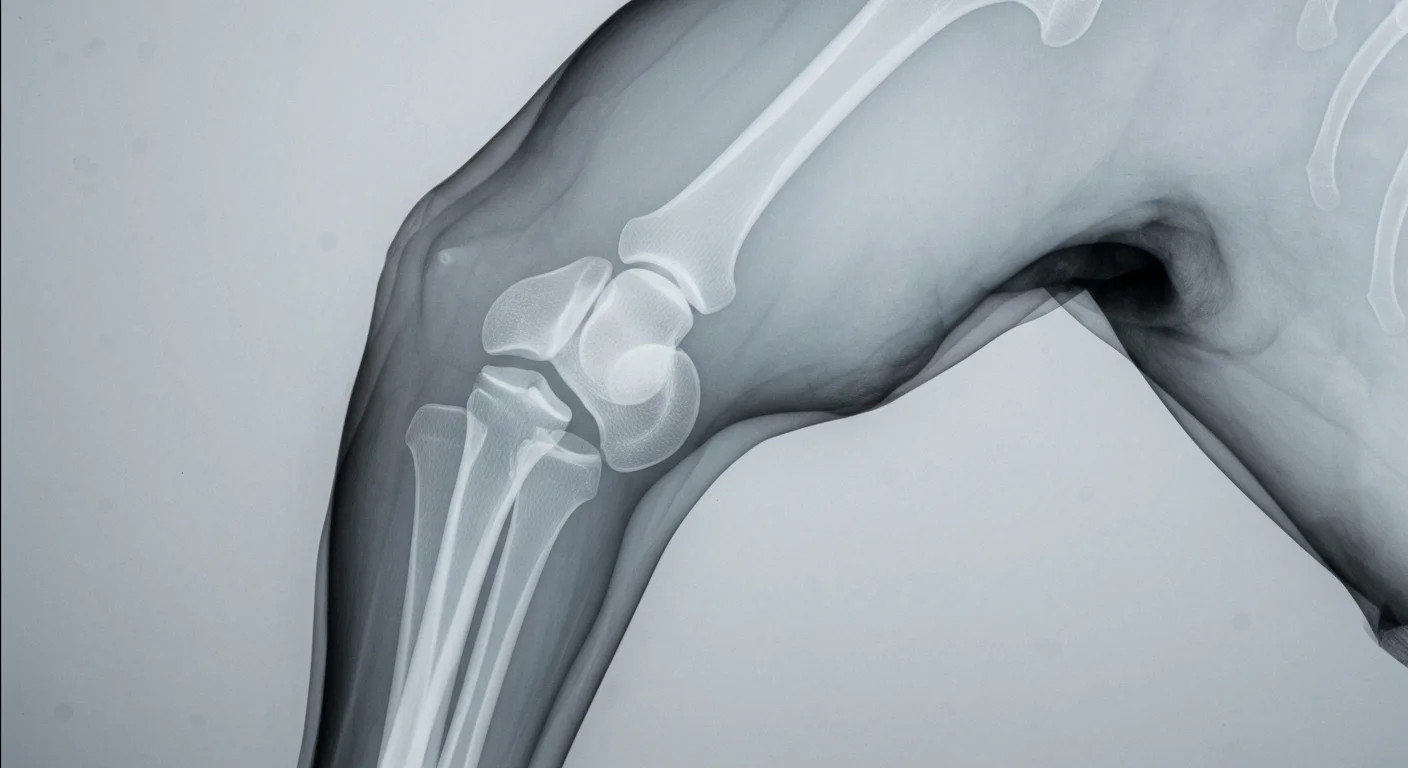
Labrador Retrievers show among the highest bilateral elbow dysplasia rates of any affected breed. Studies consistently find 60-70% of Labrador FCP cases involve both elbows, with a substantial proportion showing asymmetric severity — one elbow with Grade 2 changes and the contralateral with Grade 1 or subclinical disease detectable only by CT. This high bilateral rate has direct clinical implications, as discussed in our detailed article on bilateral elbow dysplasia management:
- Examination of any Labrador with suspected elbow disease must include systematic bilateral assessment regardless of the location of presenting lameness
- Radiographic evaluation of both elbows under the same anaesthetic episode is standard practice
- CT of both elbows should be strongly considered in any Labrador where FCP is confirmed or suspected on one side
- Post-operative rehabilitation planning must account for potential bilateral recovery requirements
The Weight-ED Interaction in Labradors
No discussion of elbow dysplasia in Labrador Retrievers is complete without addressing the profound weight-disease interaction in this breed. Labrador Retrievers have a genetic predisposition toward obesity — identified in 2016 as largely attributable to a deletion in the POMC gene that impairs satiety signaling in approximately 25% of UK Labradors. This breed-specific obesity tendency creates a powerful environmental amplifier for elbow dysplasia expression in genetically predisposed individuals.
The evidence for weight management as elbow dysplasia mitigation in Labradors is stronger than for most other breeds:
- Heavier Labradors within the normal body weight range show significantly higher ED prevalence than lighter Labradors of the same age and sex — independent of genetic background in most studies
- Puppies grown at controlled rates on large breed puppy food (lower caloric density than standard puppy food) show lower ED expression than fast-growing littermates in prospective feeding trials
- Dogs at ideal body weight at 12 months show substantially lower OA progression rates at 36 months compared to overweight dogs with equivalent initial radiographic grades
- Weight reduction in overweight Labradors with established OA produces clinically and objectively measurable pain improvement equivalent to NSAID therapy in several studies
The POMC Deletion and Weight Management
Approximately 25% of UK Labradors (and a similar proportion of Flat-Coated Retrievers) carry the POMC deletion that impairs normal satiety. Dogs with this deletion will constantly act hungry regardless of caloric adequacy and require owner discipline to maintain ideal body weight. For Labrador owners managing ED dogs, awareness of the POMC deletion's behavioral consequences — and understanding that persistent food-seeking behavior is biological rather than behavioral defiance — is important for maintaining commitment to strict weight management protocols.
Nutrition and Growth Rate Management
The relationship between nutrition and joint development during the 3-8 month growth window is particularly well-documented in Labradors. Calcium balance, growth rate, and caloric excess all influence ED expression independently and interact with genetic susceptibility. Key recommendations for Labrador puppies at risk:
- Large breed puppy food: Formulated with lower caloric density and appropriate calcium:phosphorus ratios. Standard puppy food, particularly high-protein varieties, drives growth rates that exceed what the developing elbow can accommodate.
- Measured feeding: Never free-choice feed a Labrador puppy. Labradors with the POMC deletion will overeat dramatically if given unrestricted access. Use manufacturer weight-specific feeding guides as a starting point and adjust based on body condition scoring.
- Avoid calcium supplementation: Commercial large breed puppy foods provide appropriate calcium; supplementation disrupts the homeostatic mechanisms controlling endochondral ossification and is contraindicated.
- Monthly body condition scoring: Labrador puppies should be kept slightly lean (4/9 BCS) during the critical growth window of 3-8 months. Allowing excess weight gain during this period may increase ED expression irreversibly in genetically susceptible individuals.
Breeding Program Strategies for Labrador ED
Given the FCP predominance and high bilateral rate in Labradors, breeding program strategies should incorporate the following Labrador-specific considerations:
Screening Requirements
Minimum Grade 0 bilateral for both parents is strongly recommended. UK breed clubs list elbow testing as a mandatory health test for Kennel Club Assured Breeders. US breed clubs recommend OFA Normal certification before breeding. Dogs with Grade I results should only be mated to Grade 0 partners with careful offspring monitoring.
Extended Family Analysis
Individual scores are insufficient in a breed with moderate heritability and strong polygenic architecture. Screening data from parents, grandparents, siblings, and offspring provides far better genetic risk assessment than individual phenotype alone. The UK Kennel Club's Health Results database facilitates this pedigree analysis for BVA/KC tested dogs.
EBVs are available for Labrador Retrievers in several Scandinavian countries and are being piloted in the UK. Lewis et al. (2011) demonstrated that EBV-based selection in UK Labradors produced significantly more genetic progress per generation than phenotype selection alone — findings with direct practical implications for breeding programs in any country where EBVs are accessible.
Related Database Resources
- Breed Prevalence Data - Labrador compared to other high-risk breeds
- FCP: Fragmented Coronoid Process - Dominant component in Labradors
- Nutrition and Joint Development - Growth management for at-risk puppies
- Genetics and Heritability - Labrador-specific genetic studies
Conclusion
Elbow dysplasia in Labrador Retrievers represents one of the most significant welfare challenges in veterinary orthopedics, combining high breed prevalence, FCP dominance with high bilateral rates, and a breed-specific tendency toward obesity that amplifies disease expression in genetically susceptible individuals. The combination of mandatory screening, weight management from puppyhood, evidence-based nutrition during growth, and extended pedigree analysis represents the most effective current approach to reducing ED burden in the breed. The available genetic tools — including EBVs where accessible and the extensive BVA/KC and OFA databases for manual pedigree analysis — provide a foundation for meaningful progress if applied consistently across breeding programs rather than relying on individual phenotype screening alone.