
The German Shepherd Dog is among the most extensively studied breeds for elbow dysplasia, benefiting from decades of mandatory screening through the SV (Verein für Deutsche Schäferhunde) breed club system, substantial OFA and BVA/KC databases, and disproportionate representation in veterinary orthopedic research literature. This depth of data allows a more nuanced understanding of GSD elbow dysplasia than is possible for most breeds — including the distinctive component distribution that differentiates German Shepherds from other commonly affected breeds, the effectiveness of population-level selection programs, and the specific management challenges posed by working line versus show line variation in disease expression and prevalence.
Prevalence in German Shepherd Dogs
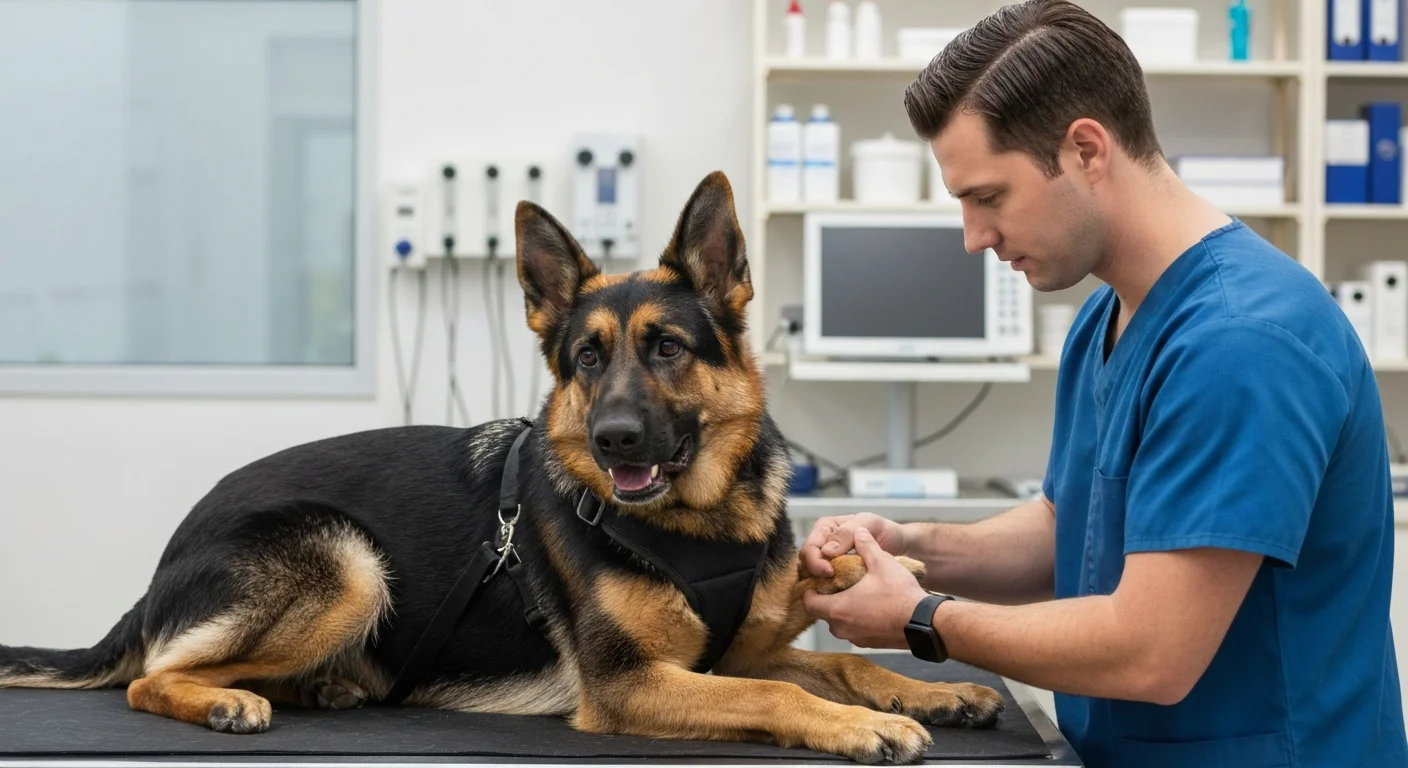
Elbow dysplasia prevalence in German Shepherd Dogs varies considerably by population, registry, and time period. Historical data from the SV's compulsory health testing program — which has required elbow radiographic evaluation for breed survey (Körung) and breed title eligibility for decades — provides the most longitudinally consistent dataset for any single breed in the world.
| Registry/Country | Period | Normal Rate | Notes |
|---|---|---|---|
| OFA (USA) | 2019-2023 | ~91% | Voluntary submission; selection bias toward tested lines |
| BVA/KC (UK) | 2018-2023 | ~85% | Score 0/0; excludes Grade 1 bilateral |
| SV (Germany) | 2015-2020 | ~82% | Near-mandatory; lower selection bias |
| Swedish KC | 2015-2020 | ~88% | Mandatory for litter registration in many programs |
| Finnish KC | 2015-2020 | ~86% | Mandatory for Breed Survey participation |
The SV's more comprehensive screening coverage relative to purely voluntary systems explains why SV prevalence figures are somewhat higher (lower Normal rates) than OFA data for the same breed — the SV data captures a broader cross-section of the breed population, including dogs whose breeders might not voluntarily submit for testing if participation were optional.
Long-Term Trend Data: Is Selection Working?
Malm et al. (2008) analyzed Swedish Kennel Club GSD elbow data from 1988 to 2005, finding a statistically significant but modest decline in ED prevalence over the 17-year period. The estimated reduction was approximately 8% in programs using EBV-based selection compared to 2% in programs using only individual phenotype screening. This remains one of the strongest published evidence bases for the effectiveness of population-level genetic selection for elbow dysplasia reduction in any breed.
Distinctive Component Distribution in GSDs
Perhaps the most clinically important breed-specific feature of German Shepherd elbow dysplasia is the component distribution. While fragmented coronoid process dominates across most affected breeds (typically comprising 65-70% of ED diagnoses), German Shepherds show a substantially higher proportion of ununited anconeal process cases compared to Labradors, Rottweilers, or retrievers.
FCP in GSDs
Approximately 45-55% of GSD ED cases. Lower than the 65-70% seen in Labrador Retrievers. May reflect different joint geometry contributing to coronoid vulnerability patterns. Clinical presentation typically between 5-9 months.
UAP in GSDs
Approximately 30-35% of GSD ED cases — significantly higher than the 10-15% seen in most other breeds. This UAP predominance is a well-established GSD-specific characteristic with genetic underpinning. German Shepherds are the breed most frequently cited in UAP literature.
OCD in GSDs
Approximately 15-20% of GSD ED cases. Comparable to other large breeds. Medial humeral condyle OCD shares pathophysiology with OCD at other joint locations in this breed.
The UAP predominance in German Shepherds has genetic implications. Studies of ED component genetics suggest UAP may have a simpler genetic architecture than FCP — potentially involving fewer genes with larger individual effects — and a higher heritability estimate. If confirmed, this would predict faster genetic progress from selection specifically targeting UAP prevalence in GSD breeding programs, though the practical challenge is that individual UAP cases cannot be distinguished from FCP or OCD on clinical grounds alone without advanced imaging.
Working Line versus Show Line Differences
The German Shepherd Dog population is functionally divided into working lines (primarily Schutzhund/IPO lines, police, military, and detection breeding) and show lines (primarily SV conformation standard breeding). These populations have been selectively bred for partially different traits for several decades, and some evidence suggests they may differ in elbow dysplasia prevalence.
Data from European kennel clubs suggests that show line GSDs have somewhat higher ED prevalence than working lines, though this difference is confounded by different testing compliance rates, different selection pressures on other traits, and population structure differences that make direct comparison difficult. What is clear is that working dog programs — particularly military and police K9 programs — have historically imposed strict elbow screening requirements on breeding stock due to the direct operational consequences of elbow-related attrition. The impact of ED on working dog service life makes elbow health a particularly high-stakes selection criterion in working line programs.
SV Breed Survey and Elbow Certification Requirements
The SV's breed survey (Körung) system requires elbow radiographic evaluation as a prerequisite for Körklasse (breed suitability) designation. Dogs with Grade 2 or 3 results are excluded from Körklasse status, effectively limiting their use in SV-registered breeding programs. This mandatory framework covers a broader proportion of actively bred dogs than voluntary systems, producing a less biased dataset and creating genuine selection pressure against high-grade ED within the registered GSD population.
The SV's Zuchtbuch (stud book) system also records elbow results for all registered litters, enabling the kind of pedigree-level analysis that feeds estimated breeding value calculations. Germany's Zuchtwert (breeding value) system, analogous to EBVs in other countries, uses this comprehensive population data to calculate genetic merit estimates for German Shepherds in SV-registered programs — one of the most sophisticated national breed-specific genetic evaluation systems currently operating for elbow dysplasia.
Screening Protocol for German Shepherds
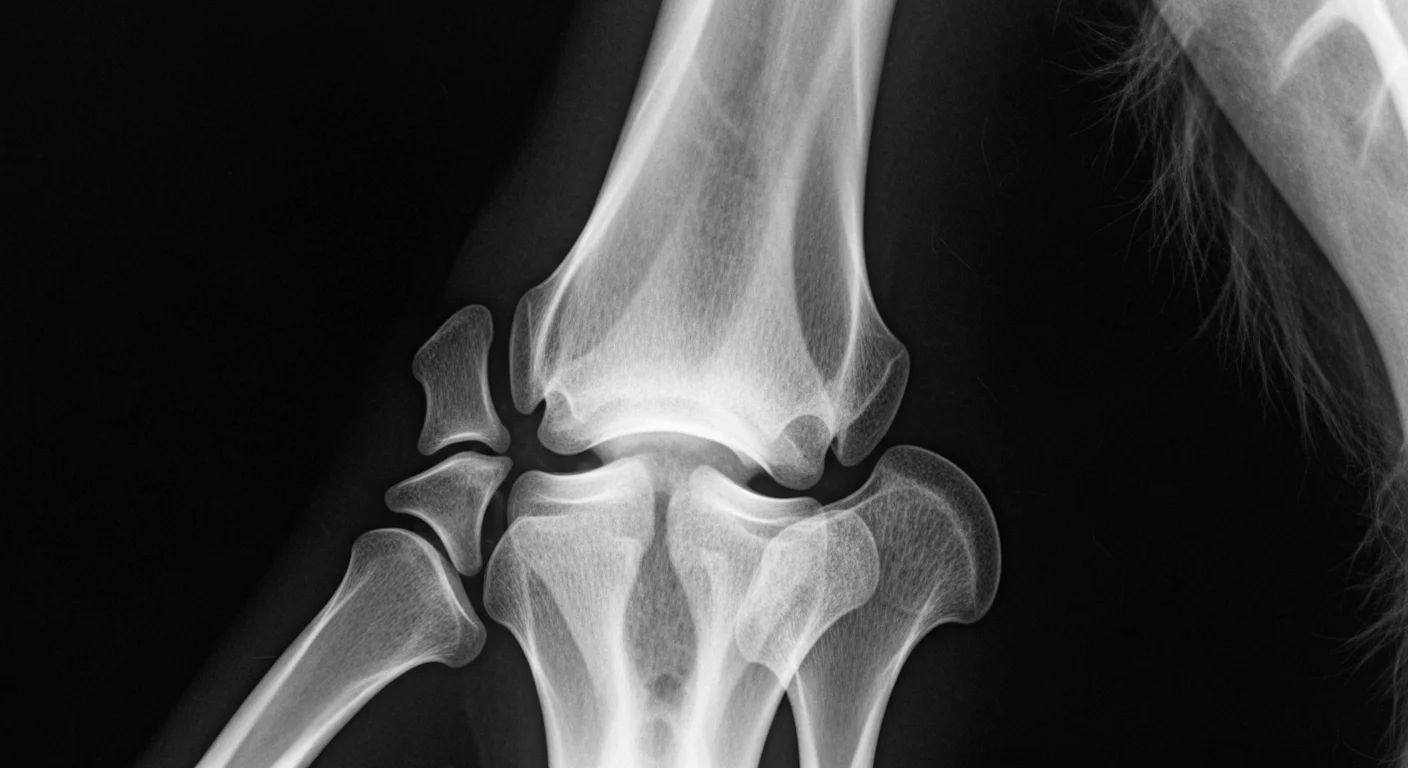
Standard elbow screening protocol for German Shepherd Dogs follows the same radiographic positioning requirements as other breeds — mediolateral flexed and craniocaudal views of both elbows under standard protocol conditions. Breed-specific considerations include:
- UAP screening timing: Given the higher UAP prevalence, any GSD puppy showing forelimb lameness before 7 months should have UAP specifically excluded radiographically, as this is the primary surgical emergency in the breed's elbow disease spectrum. UAP that is diagnosed and operated before 5-6 months consistently achieves better outcomes than late diagnosis.
- CT consideration for Grade I results: Given the GSD's working dog heritage and the operational consequences of developing elbow OA in service, CT scanning for dogs with Grade I radiographic results and intended high-demand working careers provides more complete diagnostic information than radiographs alone.
- Both elbows mandatory: The high bilateral rate in GSDs (approximately 45-50% for FCP; 40-45% for UAP) requires systematic bilateral evaluation. Any GSD with confirmed unilateral disease should have the contralateral elbow specifically evaluated by CT.
Management Considerations for GSDs
Several German Shepherd-specific factors influence elbow dysplasia management beyond the standard protocols applicable to all breeds:
- Pain stoicism: German Shepherds, particularly working line dogs, have a high pain tolerance that can mask significant elbow disease. A GSD that "runs fine" may be masking Grade 2-3 elbow disease with central sensitization and chronic adaptation. Objective force plate assessment provides more reliable pain detection than behavioral observation in this breed.
- Size and weight management: Male GSDs commonly reach 35-40 kg. The mechanical loading consequences of any excess weight are magnified at this body mass, and weight management is more impactful in larger individuals. Target body condition score 4-5/9 with regular monitoring.
- Activity requirements: GSDs are high-activity dogs; activity restriction for elbow management requires careful balance against behavioral consequences and welfare concerns. Structured rehabilitation that maintains aerobic fitness through low-impact modalities (hydrotherapy, controlled leash work) is preferable to broad activity restriction.
- Working career planning: For dogs in working programs, realistic career planning discussions based on elbow grade and progression rate should occur early. A GSD with Grade 2 bilateral FCP managed at 12 months has a very different working career trajectory than one diagnosed at 4 years with established secondary OA. Early diagnosis enables early career planning that serves both dog welfare and handler operational planning.
Cross-Reference with Hip Dysplasia
German Shepherd Dogs have among the highest hip dysplasia prevalence of any breed, and both conditions frequently co-exist in the same individual. Dogs with both elbow and hip dysplasia face compounded welfare challenges — compensatory gait patterns from hip pain increase elbow loading, and vice versa. Breeding decisions that address both conditions simultaneously, rather than optimizing for one at the expense of the other, are essential for meaningful long-term health improvement. Resources on hip dysplasia in shepherd breeds are available at hip-dysplasia-shepherds.com.
Related Database Resources
- Breed-Specific Prevalence Data - GSD compared to other high-prevalence breeds
- UAP: Ununited Anconeal Process - GSD's most distinctive ED component
- Genetics and Heritability - GSD-specific heritability data
- Elbow Dysplasia in Working Dogs - Operational implications for GSD
Conclusion
The German Shepherd Dog's combination of high breed prevalence, distinctive UAP predominance, extensive mandatory screening history, and disproportionate representation in working dog populations makes it one of the most consequential breeds for elbow dysplasia research and management. The decades of SV-mandated screening have produced the world's most longitudinally comprehensive single-breed elbow dataset, documenting modest but real genetic progress where EBV-based selection has been implemented. For breeders, the priority areas are mandatory screening of all breeding candidates, awareness of the UAP-specific component distribution, systematic bilateral evaluation given the high bilateralism rate, and integration of extended pedigree data into breeding decisions rather than reliance on individual phenotype alone.