
Pain in canine elbow osteoarthritis is controlled first with nonsteroidal anti-inflammatory drugs, weight management and structured exercise, with opioids reserved for short, defined episodes such as acute flare or the perioperative window. That sequence is not a preference: it follows the mechanism of the disease, in which synovial inflammation and subchondral bone pressure drive nociception that responds to prostaglandin inhibition and load reduction. Opioids remain in the formulary, but they are a later step, and the same public debate that shapes human addiction treatment now reaches the veterinary clinic through prescribing records and disposal rules.
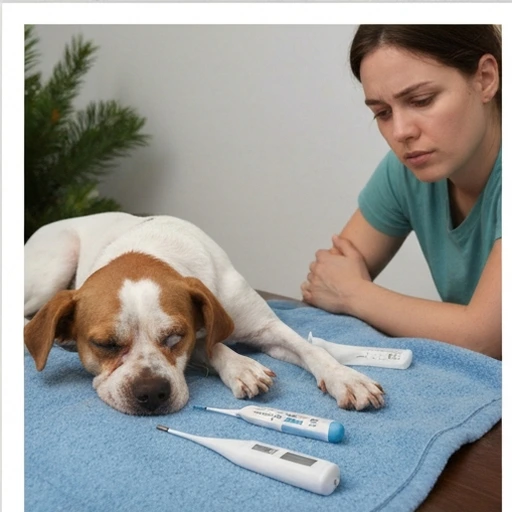
How is pain controlled in canine elbow osteoarthritis without reaching for opioids?
The first line is pharmaceutical and mechanical at the same time. Meloxicam and other NSAIDs reduce prostaglandin-mediated inflammation in the joint capsule and synovium, and the effect is measurable on force plate gait analysis rather than on the owner's impression alone (Moreau et al., 2003, American Journal of Veterinary Research). Because elbow osteoarthritis in dogs is frequently secondary to fragmented medial coronoid process or an ununited anconeal process, the registry data that breeders and owners already read for elbow scores describe the same joints that later generate the pain complaint. A dog with a high elbow score is not automatically painful, but the structural change is the reason NSAID-first logic exists.
Weight control is the intervention with the strongest long-term evidence in this disease. In a controlled study of Labrador Retrievers, dogs kept lean from puppyhood had a substantially lower prevalence and later onset of osteoarthritis, including in the elbow, than dogs fed to a heavier body condition (Kealy et al., 2002, Journal of the American Veterinary Medical Association). That finding is why a veterinarian will often discuss body condition score before increasing a drug dose.
Beyond NSAIDs, multimodal protocols combine several agents at lower individual doses. Amantadine, gabapentin or pregabalin, and in some protocols tramadol, are used for neuropathic or wind-up components, while intra-articular therapies and physiotherapy address load and range of motion. The rationale is additive effect with reduced reliance on any single drug class. For owners comparing human treatment models, the same logic of staged, monitored care appears in the private treatment centers guide, where medication-assisted and behavioural components are described as layers rather than alternatives. The parallel is structural, not clinical: in both settings the question is which intervention is first, which is added, and what is documented.
When do veterinarians still prescribe opioids for a dog, and what do they record?
Opioids are still prescribed, and the honest answer is that the indications are narrower than the public assumes. The common ones are acute severe pain, such as a humeral condylar fracture or a dog presenting non-weight-bearing after a fall; the immediate perioperative period around elbow arthroscopy or joint surgery; and short rescue courses when an NSAID is contraindicated by renal, hepatic or gastrointestinal disease. Chronic daily opioid prescribing for osteoarthritis is uncommon in companion animal practice, partly because of tolerance and gastrointestinal effects, and partly because the regulatory environment has made it administratively costly.
What gets recorded matters. In the United States, veterinarians who dispense or prescribe controlled substances register with the Drug Enforcement Administration and must maintain records of receipt, storage and dispensing. Several states now require veterinarians to check a prescription drug monitoring programme before prescribing a controlled substance, and some require reporting of dispensed opioids. The clinical record typically carries the drug, dose, quantity, duration, the reason an alternative was not used, and the owner's identification. These are the fields that an inspector or a state board can review.
The recording burden is not incidental. It shapes behaviour: when a veterinarian must document why an NSAID was unsuitable, the threshold for reaching for an opioid rises. That is a prescribing effect produced by paperwork rather than by pharmacology, and it is one reason opioid dispensing in veterinary medicine has been studied as a distinct policy problem (Wensley et al., 2020, Veterinary Record).
Why does companion animal prescribing belong to the same public debate as human addiction treatment?
Because the supply chain is shared. The opioids dispensed for a dog come from the same manufacturers, the same wholesalers and, in some households, the same medicine cabinet as those prescribed for a person. Veterinary tramadol and hydrocodone have been identified in diversion cases, and unused veterinary opioids are a recognised source of household access. The Centers for Disease Control and Prevention notes that most people who misuse prescription opioids obtain them from a friend or relative, with or without that person's knowledge (CDC, 2022, Prescription Opioid Data). A bottle left after a dog's surgery is part of that picture.
There is also a professional-ethics overlap. Veterinarians are not treating addiction, but they are prescribing a controlled substance to an owner who may have a substance use disorder, and they must decide how to respond. Guidance from the American Veterinary Medical Association addresses impaired clients, requests for early refills and the limits of the veterinarian's role, and it points toward referral rather than management. That referral pathway is where veterinary practice touches the human treatment system directly.
The final overlap is language. Public discussion of opioid stewardship uses the same words in both contexts: indication, duration, tapering, monitoring, disposal. When a state legislature debates a prescribing limit, the text often covers practitioners generally, and veterinary exemptions have had to be negotiated separately. Owners who follow human treatment policy therefore already understand the vocabulary that governs their dog's pain relief.
What does the evidence actually support in long-term elbow management?
The strongest evidence in canine elbow osteoarthritis supports NSAIDs, weight reduction and exercise modification, with surgical management of the underlying lesion where indicated. A systematic review of NSAID trials in dogs with osteoarthritis found consistent short-term improvement in pain and function scores, while noting variation in outcome measures and follow-up length (Sanderson et al., 2009, Journal of the American Veterinary Medical Association). That limitation is worth naming: the trials are short, the scoring instruments differ, and owner-reported outcomes are not blinded in every study.
Multimodal protocols are widely used and biologically plausible, but the additive evidence is thinner than the NSAID evidence. Amantadine has been studied as an adjunct in dogs with osteoarthritis and showed improvement in a small trial (Lascelles et al., 2008, American Journal of Veterinary Research), and the sample size limits how far that can be generalised. Gabapentin use in dogs rests largely on extrapolation from human neuropathic pain and on clinical experience rather than on large canine trials. Naming that gap is part of reading the literature honestly.
Regenerative therapies, including platelet-rich plasma and stem cell preparations, are covered elsewhere on this site, and the same caution applies: mechanism and marketing have run ahead of controlled outcome data in dogs.
What should owners ask before an opioid is dispensed?
Four questions cover most of the ground. Which drug, at what dose, for how many days. What the alternative was and why it was not used. What to do with leftover tablets. And what signs would justify stopping early and calling the clinic. A veterinarian who answers these is documenting the same decision in the record, which is the point.
Owners should also expect a conversation about storage. Opioids kept for a dog should be in a locked container, counted, and returned to a pharmacy take-back point rather than flushed or kept indefinitely. If a household member has a history of substance use, that should be raised with the veterinarian before the prescription is written, not after. The veterinary team can select a protocol that avoids a controlled substance at home, and in many cases an injectable given in clinic or a non-opioid combination will do the work.
Finally, owners should read the discharge instructions as a clinical document rather than a receipt. The duration, the taper if there is one, and the recheck date are the parts that determine whether the episode stays short. That is the same discipline that any treatment system, human or veterinary, depends on.