
Elbow dysplasia stands as the primary cause of forelimb lameness in medium and large breed dogs, yet the condition remains frequently misunderstood by both practitioners and breeders. This developmental disorder affects millions of dogs worldwide, causing pain, reduced mobility, and progressive osteoarthritis. Understanding elbow dysplasia requires examining its multifactorial etiology, recognizing its varied clinical presentations, and appreciating the complex interplay between genetics and environment that determines whether an at-risk dog develops clinical disease.
Defining Elbow Dysplasia
The term "elbow dysplasia" functions as an umbrella classification encompassing several distinct developmental abnormalities affecting the canine elbow joint. The International Elbow Working Group (IEWG), established in 1989, formally codified this definition to standardize international screening protocols and facilitate meaningful comparison of prevalence data across populations.
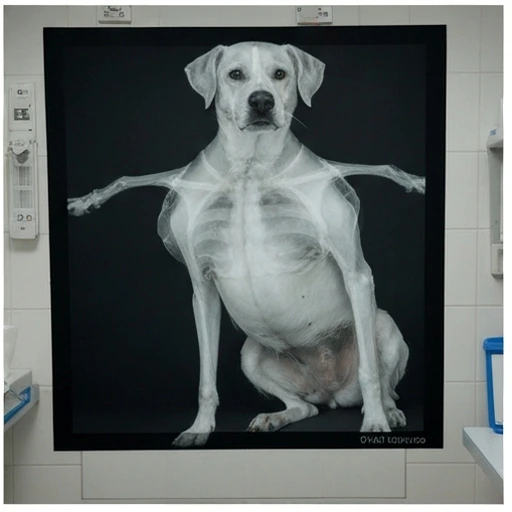
Three primary conditions comprise the elbow dysplasia complex: fragmented medial coronoid process (FCP), osteochondritis dissecans of the medial humeral condyle (OCD), and ununited anconeal process (UAP). These conditions share a hypothesized common etiology rooted in asynchronous growth of the radius and ulna, creating abnormal joint mechanics during the critical developmental window of 4-8 months of age.
FCP (Fragmented Coronoid)
Most common component (65-70% of cases). The medial coronoid process fragments or fails to fuse with the ulna, causing pain and progressive joint damage.
OCD (Osteochondritis Dissecans)
Accounts for 20-25% of cases. A cartilage flap develops on the medial humeral condyle, potentially detaching into the joint space.
UAP (Ununited Anconeal)
Represents 10-15% of cases. The anconeal process fails to fuse with the ulna by skeletal maturity, causing joint instability.
Etiology: The Causes of Elbow Dysplasia
Elbow dysplasia results from the complex interaction of genetic predisposition and environmental factors. No single gene controls ED development; rather, multiple genes each contribute small effects that, combined with environmental influences, determine whether clinical disease manifests.
Genetic Factors
Heritability estimates for elbow dysplasia range from 0.25 to 0.45 across different breed populations and study methodologies, as documented through decades of screening data compiled by the Orthopedic Foundation for Animals (OFA). This moderate heritability indicates that genetic factors explain 25-45% of the variation in ED expression, with the remainder attributable to environmental influences and random developmental variation.
The polygenic inheritance pattern means that clear-screened parents can still produce affected offspring, as each carries genetic variants that, when combined, may exceed the disease threshold. Maki et al. (2000) demonstrated that offspring of two Grade 0 German Shepherd parents still developed ED at rates of 8-12% depending on extended family history.
Research Insight: Genetic Architecture
Quantitative trait locus (QTL) studies have identified chromosomal regions associated with ED susceptibility on CFA5, CFA12, CFA15, and CFA18. However, identified variants explain only 15-20% of genetic variance, indicating many causal variants remain undiscovered. This complexity explains why genomic tests for ED remain unreliable.
Environmental Factors
Non-genetic factors significantly influence ED expression in genetically susceptible individuals. The most evidence-supported environmental risk factors include:
- Rapid growth rate: Dogs growing faster than average during the 3-6 month period show higher ED prevalence. Excessive caloric intake, particularly high-protein puppy diets, accelerates growth beyond what skeletal development can accommodate.
- Body weight: Heavier dogs experience greater mechanical loading on developing joints. Dogs in the upper quartile for breed weight at 6 months show 2-3x higher ED rates.
- Nutritional imbalances: Calcium oversupplementation and inappropriate calcium:phosphorus ratios disrupt endochondral ossification, potentially contributing to OCD lesions. The relationship between nutrition and joint development during the critical growth window is one of the most well-documented environmental influences on ED expression.
- Exercise patterns: Excessive high-impact activity before skeletal maturity may exacerbate subclinical joint incongruity, though evidence remains limited and conflicting.
Pathophysiology: How Elbow Dysplasia Develops
The fundamental pathophysiological mechanism underlying elbow dysplasia involves abnormal mechanical loading across the joint surfaces during skeletal development. The canine elbow is a complex joint where three bones, the humerus, radius and ulna, must articulate with precise congruence to distribute weight-bearing forces evenly.

When the radius and ulna grow at slightly different rates, a condition termed elbow incongruity develops. Even 1-2mm of radio-ulnar length discrepancy significantly alters contact pressure distribution. Short radius incongruity concentrates force on the anconeal process, potentially contributing to UAP. Short ulna incongruity overloads the medial coronoid process, predisposing to FCP.
Progressive Nature of ED
Elbow dysplasia is not a static condition. Initial developmental lesions trigger inflammatory cascades that promote secondary osteoarthritis. Dogs with subclinical lesions at 12 months may show significant degenerative changes by 3-5 years. This progression occurs regardless of clinical signs, emphasizing the importance of radiographic screening before athletic training or breeding.
The Incongruity Debate
Whether elbow incongruity should be classified as a fourth ED component remains controversial. Some investigators argue incongruity represents the primary causative mechanism underlying all three classical lesions rather than a distinct pathology. The IEWG has resisted formal inclusion, though many screening protocols now note incongruity presence on certification results.
Clinical Presentation
Clinical signs of elbow dysplasia typically emerge between 4-10 months of age during the period of maximum skeletal growth, though some dogs remain subclinical until osteoarthritis becomes advanced. The presentation varies considerably based on lesion type, severity, and whether unilateral or bilateral disease is present.
Common Clinical Signs
- Forelimb lameness: May be intermittent initially, worsening with activity. Often described as "warming up" and then "wearing down" with exercise.
- Stiff gait: Particularly noticeable after rest, with gradual improvement during movement.
- Reduced range of motion: Decreased elbow flexion and extension compared to unaffected dogs.
- Joint effusion: Palpable swelling around the medial aspect of the elbow.
- Pain on manipulation: Discomfort during forced flexion-extension or pressure over the medial coronoid region.
- Muscle atrophy: Reduced muscle mass in the affected limb in chronic cases.
Bilateral Disease Caution
Approximately 50-60% of ED cases involve both elbows, which can mask obvious lameness. Dogs with bilateral disease may show only subtle gait abnormalities, reluctance to exercise, or difficulty rising. Absence of obvious lameness does not rule out ED, particularly in stoic working breeds where drive and pain tolerance can mask clinical signs until significant joint damage has accumulated.
Diagnosis
Accurate diagnosis of elbow dysplasia requires combining clinical examination findings with advanced imaging. Physical examination alone cannot definitively diagnose ED, and radiographic screening is essential for breeding stock evaluation regardless of clinical status.
Physical Examination
Orthopedic examination should include observation of gait at walk and trot, palpation of the elbow joint for effusion and pain, and manipulation to assess range of motion. The "coronoid compression test" involves applying pressure over the medial coronoid while flexing and extending the elbow, which typically elicits discomfort in dogs with FCP.
Radiographic Evaluation
Standard radiographic views include mediolateral (flexed and extended) and craniocaudal projections. These views allow assessment of osteophyte formation, subchondral sclerosis, joint incongruity, and the status of the anconeal process. However, radiographic sensitivity for early FCP lesions is only 60-70%.
Advanced Imaging
When radiographs are equivocal or surgical planning requires precise lesion localization, advanced imaging modalities offer superior diagnostic capability:
| Modality | Sensitivity | Best Applications | Limitations |
|---|---|---|---|
| Radiography | 60-70% (FCP), 85%+ (UAP) | Screening, OA assessment | Early lesions missed |
| CT Scan | 95%+ | FCP confirmation, surgical planning | Cost, anesthesia required |
| MRI | 90%+ | Cartilage assessment, soft tissue | High cost, limited availability |
| Arthroscopy | Gold standard | Definitive diagnosis + treatment | Invasive, requires anesthesia |
Prognosis and Long-Term Outlook
The prognosis for dogs with elbow dysplasia varies substantially based on lesion type, severity at diagnosis, treatment approach, and intended activity level. Generally, earlier diagnosis and intervention correlate with better long-term outcomes, though some degree of progressive osteoarthritis occurs in most affected dogs regardless of treatment.
Dogs with Grade 1 ED detected at routine screening often maintain good quality of life with conservative management and lifestyle modifications. Grade 2-3 dogs typically require surgical intervention for optimal function, and even with treatment, most will develop progressive OA requiring ongoing management.
| ED Grade | Typical Prognosis | Expected Management |
|---|---|---|
| Grade 0 | Excellent | No restrictions |
| Grade 1 | Good to Excellent | Weight management, activity modification |
| Grade 2 | Fair to Good | Surgical consideration, ongoing OA management |
| Grade 3 | Guarded | Surgery often necessary, lifelong OA management |
Prevention Strategies
While genetic predisposition cannot be eliminated, environmental management can reduce ED expression in susceptible individuals. Breeders and puppy owners should implement the following strategies:
- Controlled growth rate: Feed puppy food formulated for large breed growth that limits caloric density and calcium content. Avoid free-choice feeding.
- Maintain lean body condition: Puppies should be kept slightly lean during growth phases. Body condition scoring should target 4-5/9 on standard scales.
- Avoid calcium supplementation: Commercial large breed puppy foods provide adequate calcium. Supplementation disrupts calcium homeostasis and may contribute to developmental orthopedic disease.
- Appropriate exercise: Self-limiting play is generally safe; avoid forced exercise, repetitive jumping, and high-impact activities before 12-18 months of age.
- Early screening: Radiographic evaluation at 12-15 months allows early detection and management before significant OA develops. Breeders of shepherd breeds should also consider hip dysplasia screening, as both conditions frequently co-occur in predisposed lines.
Related Database Resources
- Understanding ED Components - Detailed analysis of FCP, OCD, and UAP
- IEWG Scoring System - How grades 0-3 are determined
- Radiographic Diagnosis - Imaging techniques for ED detection
- Conservative Management - Non-surgical treatment approaches
- Surgical Interventions - When and how surgery helps
Conclusion
Elbow dysplasia represents a significant welfare concern affecting substantial proportions of large breed dog populations. Understanding its multifactorial nature, recognizing the limitations of phenotypic screening, and implementing evidence-based prevention and management strategies are essential for veterinary professionals and breeders working to improve canine orthopedic health. Progress requires consistent screening, transparent reporting, and breeding decisions informed by population genetics rather than individual phenotype alone.